
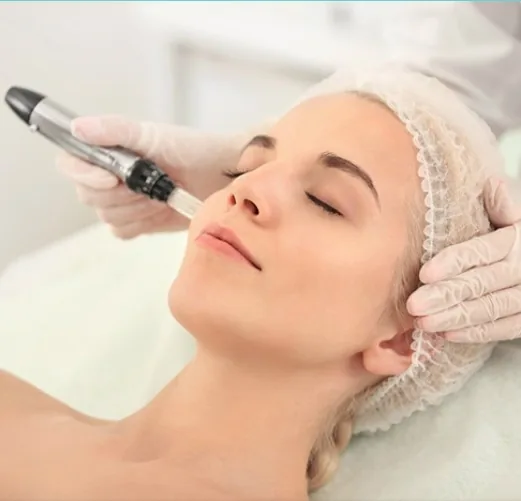
Both Dermapen and chemical peels renew your skin — but through different mechanisms with different best uses. Choosing wrong wastes time and money. Here's the honest comparison from our Medellín practice.
How each treatment works
Dermapen: mechanical injury via micro-needles → collagen stimulation from below. Chemical peel: chemical exfoliation of skin layers → renewal from above. Dermapen builds new tissue; peels remove damaged tissue.
Best for acne scars: Dermapen
Atrophic acne scars need new collagen to fill depressions. Chemical peels remove surface skin but don't fill scars. Dermapen rebuilds the scaffolding underneath. Verdict: clearly Dermapen for atrophic scarring.
Best for superficial pigmentation: Chemical peel
For superficial age spots, sun damage, or post-inflammatory pigmentation, glycolic or salicylic peels can be more direct and effective in fewer sessions. Dermapen + actives also works but takes more sessions.
Best for sensitive or thin skin: Dermapen
Chemical peels can be too aggressive for sensitive, rosacea-prone or thin skin. Dermapen at superficial depth (0.5mm) is gentler and more controllable. Some patients combine Nanopore (the no-needle version) with very mild peels.
Best for general anti-aging: combined approach
For overall rejuvenation, alternating monthly Dermapen and quarterly mild peels gives compounding results — collagen stimulation from below + cellular renewal from above. Dr. Catalina Henao designs personalized protocols based on your skin assessment.
Book your skin consultation in Medellín
Office at Edificio Forum, Cl 7 S 42-70, Cons. 1001 · Medellín, Colombia
💬 Book via WhatsApp